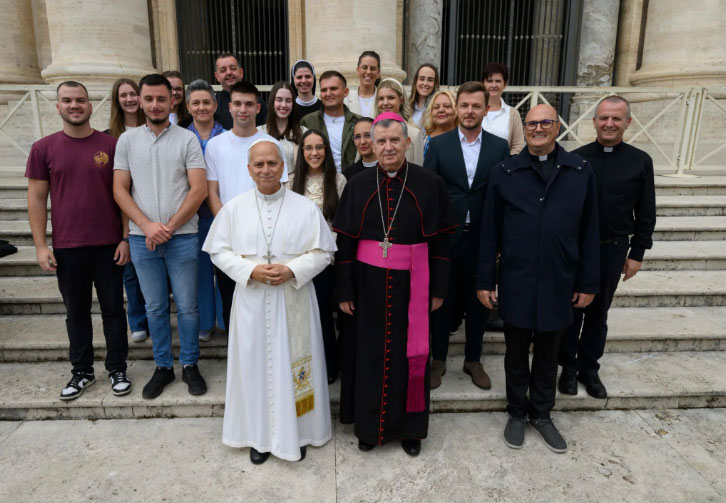
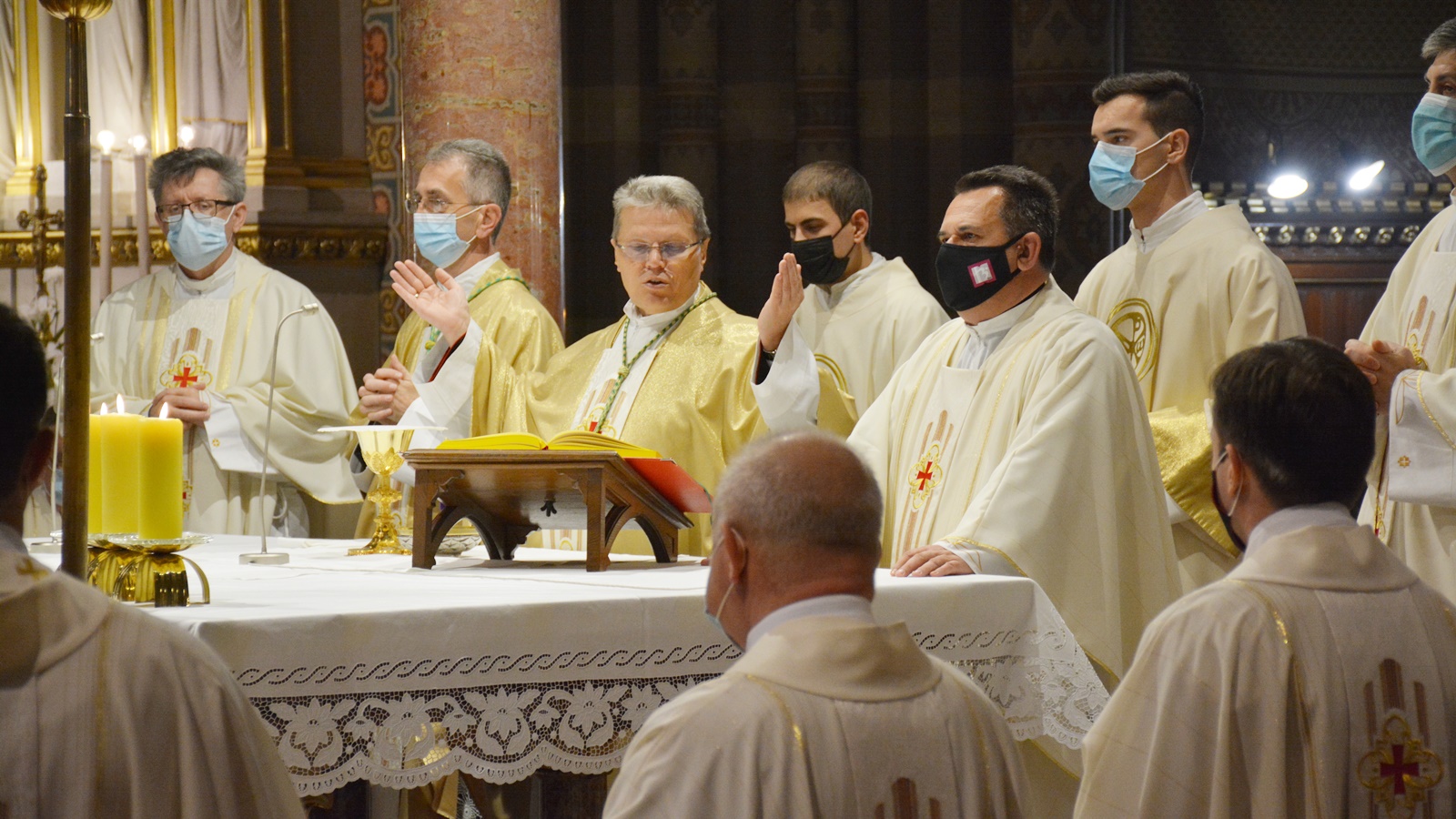
The celebration of Catholic Faculty of Theology Day in Đakovo began with a Eucharistic celebration at Đakovo Cathedral on Friday, November 5, 2021. The Mass was presided over by the Faculty’s grand chancellor, Đakovo-Osijek Metropolitan Archbishop Đuro Hranić. The celebration continued with a formal academic program, an annual report on the Faculty’s work, a graduation ceremony and the presentation of awards and certificates of appreciation.
At the beginning of Mass, the archbishop greeted the academic community, led by Dean Vladimir Dugalić, and wished it a happy Faculty Day. He also greeted the community of the Theological Seminary in Đakovo, recalling that the Seminary and the Catholic Faculty of Theology “were born together, on this day in 1806,” and wishing them a happy 215th birthday.
Hranić: Community as a wellspring of spiritual support
In his homily, the archbishop said that, through the sacraments of baptism and confirmation, each person present is a temple of the Holy Spirit, anointed and consecrated. “And together we are the mystical Body of Christ, a holy people, a people acquired for God. Our ecclesial community, and we as the academic community of a theological faculty, are also places where God dwells—or at least should dwell,” he stressed. Reflecting on the proclaimed Gospel account of the dishonest steward, he explained that Jesus praises the steward’s boldness and thereby teaches that following him requires a willingness to take risks.
He asked those present whether they, too, had not taken a great risk in faith, guided by love for God, solidarity with the Church and commitment to its evangelizing mission. He connected that choice with priestly ordination, asking to be admitted to the Theological Seminary, and enrolling in a faculty of theology, whether as a lay believer or as a candidate for the priesthood. Their passion for taking part in the Church’s mission, he said, already makes God’s kingdom visible among people.
Speaking about the decision to study theology, Hranić warned that the need for catechists had been met, and that catechists, together with other teachers, shared the effects of a reduction in the number of classes and working hours. Enrolling in theology as a layperson in such circumstances, or as a candidate for the priesthood, he said, “can only be done out of love: unconditional, wholehearted love; love borne by great enthusiasm and ardor, all the way to being intoxicated…” Persevering in this vocation and drawing on the wisdom and creativity of the Holy Spirit requires a community, “like a well from which we drink at the source of God’s grace, goodness, love and commitment.”
The archbishop placed particular emphasis on belonging to the ecclesial community and experiencing understanding and support within it. He described it as a well where hunger and thirst for God, his word, grace and forgiveness are quenched. The Church, he said, is needed as a concrete community of faith and life, as a family with room and a place in its heart for everyone, where all are brothers and sisters, sons and daughters of the same heavenly Father. In such a community, everyone has equal dignity, regardless of social position, origin, education, income or membership in a social group, association or political party. It should also be a place of reconciliation and peace, a family that rejoices when a member who has become estranged returns, welcomes that person joyfully, and searches for the one who is lost until they are found.
Greetings to the academic community and graduates
After Mass, the formal program continued in the Bishop Antun Mandić Hall. The Faculty’s mixed choir, conducted by maestro Ivan Andrić, performed the national anthem of the Republic of Croatia and the song “Our Father.” A minute of silence followed for all those who lost their lives in the Homeland War.
The opening address was given by the dean, Associate Professor Vladimir Dugalić, who reflected on the circumstances caused by the pandemic. Quoting Pope Francis, he stressed that society needs a Gospel-based hermeneutic in order to understand the world better. A good theologian, he emphasized, is open-minded and ready for new reflection in concrete situations.
Professor Vlado Guberac, rector of Josip Juraj Strossmayer University of Osijek, expressed his satisfaction that the University bears Strossmayer’s name. He called the Catholic Faculty of Theology in Đakovo, as a constituent of the University, its moral backbone. He also noted that, thanks to the Church, higher education in eastern Slavonia has existed for more than 300 years.
Professor Darko Tomašević, dean of the Catholic Faculty of Theology at the University of Sarajevo, addressed the graduates in particular, encouraging them not to be afraid because God is with them. He reminded them that they were receiving an official document testifying to their education, but that this did not mark the end of their journey: they were called to affirm what they had learned every day through their own lives.
Associate Professor Stanislav Slatinek, vice-dean of the Faculty of Theology in Ljubljana, wished the graduates success and announced continued cooperation between the two theological institutions. Assistant Professor Branko Murić, vice-dean of the Catholic Faculty of Theology in Zagreb, stressed that theologians’ importance in society still needed to be recognized, particularly through their work, integrity and creativity—qualities he wished the graduates to embody.
Annual report: 87 students and new programs in preparation
After the greetings, Dean Dugalić presented the annual report on the Faculty’s work. The institution was then in its 216th year of existence and its 17th year since being raised to faculty status. Some teaching during the previous academic year had been conducted online. At the time of the celebration, the Faculty had 87 enrolled students, along with 24 teaching staff and 18 members of non-teaching staff.
The report stated that the statute had been completed and confirmed the previous year, and that the Faculty had received a positive assessment from the reaccreditation committee, the Agency for Science and Higher Education, and the Ministry, identified in the IKA report as the Ministry of Science, Education and Sports. Two teachers were appointed associate professors, three people earned doctorates, and Professor Pero Aračić became the first professor emeritus.
Sixteen agreements were signed with primary and secondary schools, enabling fifth-year students to observe classes. Eight symposia and academic colloquia and two guest lectures were organized. The Erasmus program also continued: two female students from Poland stayed in Đakovo, one student from the Catholic Faculty of Theology in Đakovo was in Prague, and one female student was in Salamanca.
Three postgraduate programs, three continuing education programs, a double-major degree program and two research centers were in the process of being launched. The digitization of library and archival materials continued, and plans also included Teologijada.
Graduation ceremony and awards for students and staff
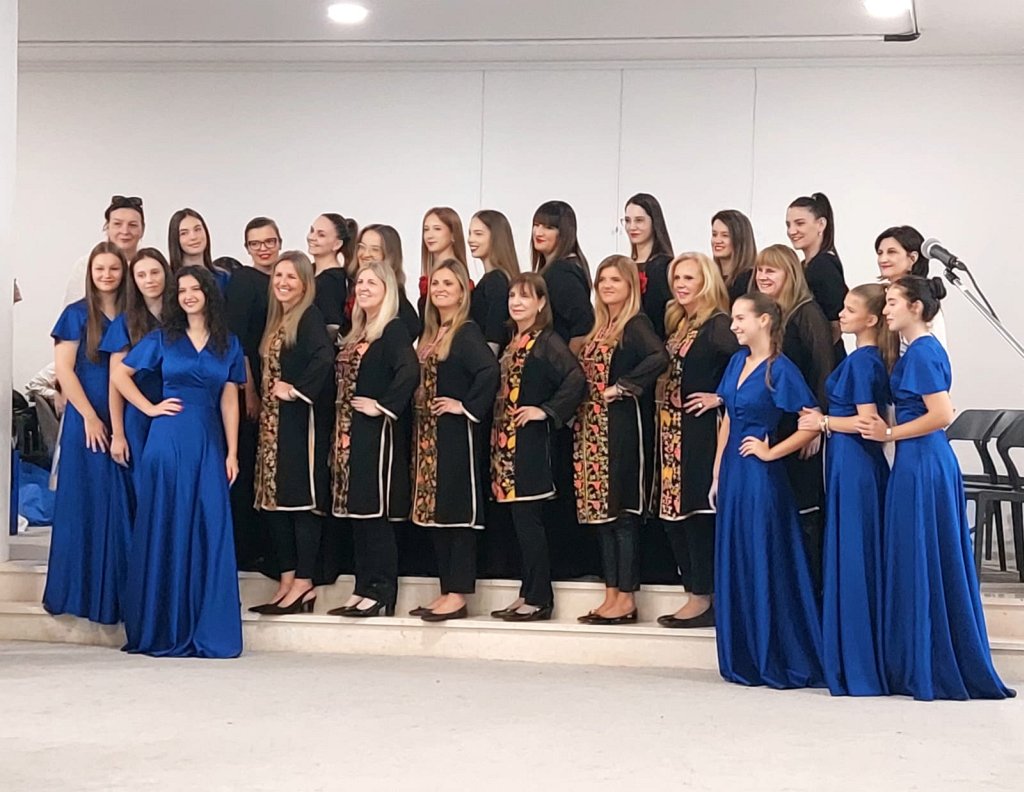
After the report, the vocal group Đakovčanke performed two songs. The academic graduation ceremony followed: 23 students received the degree of Master of Theology, one graduate theologian was also presented, and eight diplomas were awarded for continuing education in Religious Education and Pedagogy and the Good Shepherd Catechesis.
The dean’s awards for students of the year went to Luka Marošević and Maria Dragomirović, who achieved a grade average of 5.0 in their first year; Lucija Tica, for an average of 4.83 in her second year; Vladimir Sabo, for 4.86 in his fourth year; and Florijan Zagorščak, for 4.77 in his fifth year of study.
Helena Kulaš received the award for best graduate thesis for “The Ecumenical Endeavours of Bishop Ćiril Kos,” written under the supervision of Assistant Professor Antun Japundžić. He also briefly presented her work. Professor Ivica Raguž received an award for outstanding contribution to science, while Ankica Landeka, Marin Ivanišić and Susanne Simon Kolarević were recognized for exceptional dedication among the non-teaching staff.
Certificates of appreciation from the Faculty were presented to Petar Vidović for his many years of dedicated work as secretary, to retired professor Slavko Platz, who donated part of his savings to the Faculty, and to the City of Đakovo for its cooperation. The formal program concluded with the choir’s performance of “Gaudeamus.”