To pray persistently, to turn to God with confidence as Father, and to ask for the gift of the Holy Spirit: these are the central themes in Fr Tomislav Pervan’s reflection, published by Radio Mir Međugorje on 8 October 2026 under the title “Give Us Your Spirit, Lord”. Reflecting on the passage from Luke’s Gospel, Lk 11:5–13, Pervan stresses that prayer is not a demand that God fulfil every wish of ours, but a space in which we entrust to him what we carry in our hearts and surrender ourselves to his will.
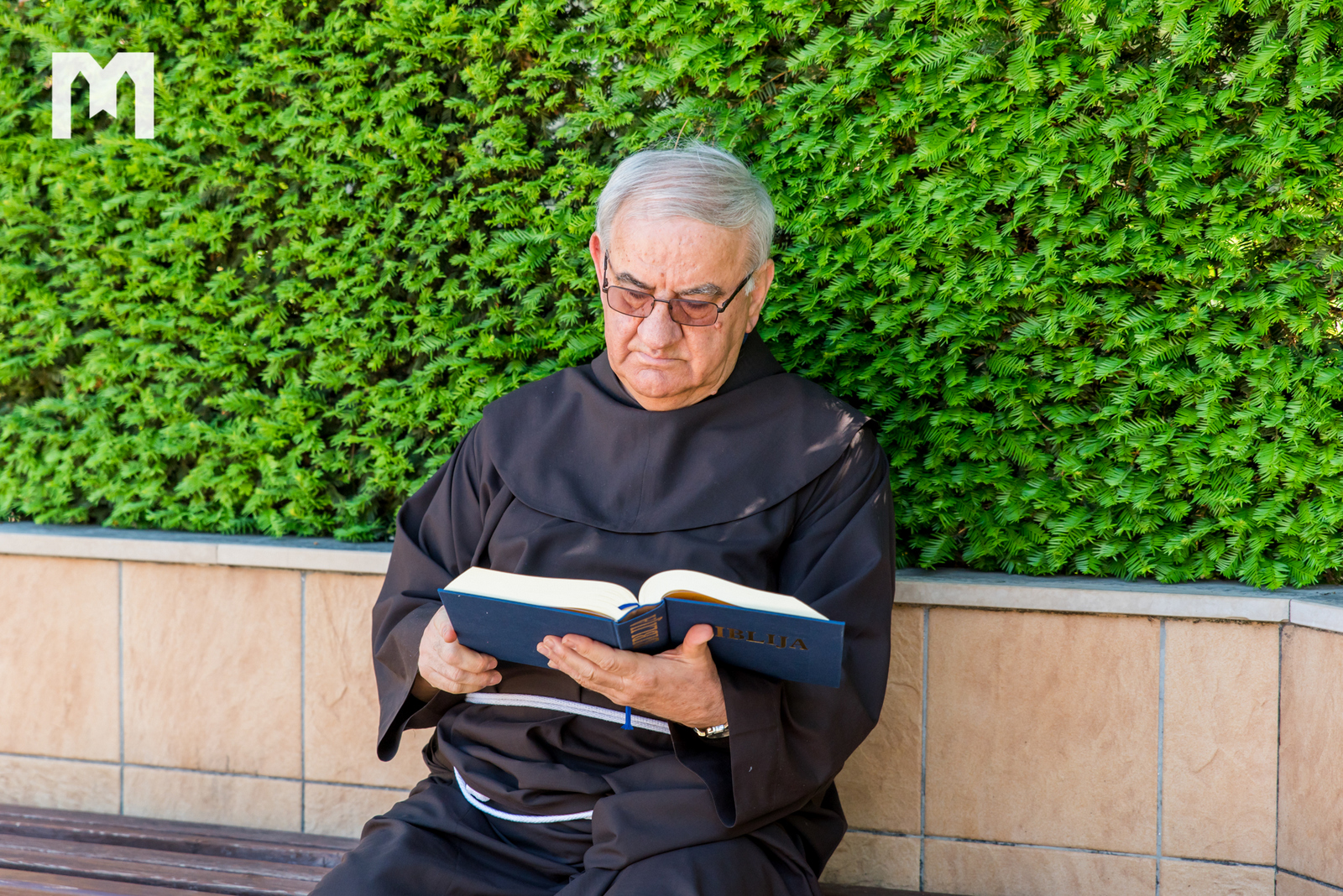
For many years, Fr Tomislav Pervan has reflected on the Gospel in Radio Mir Međugorje’s daily segment “The Biblical Message of the Day”. He holds a doctorate and is the author of numerous books of theological reflection. He lives and works in Medjugorje as chaplain to the religious sisters, and also spends time in the confessional every day. A former parish priest of Medjugorje and provincial of the Herzegovinian Franciscan Province, he has written for years for Naša ognjišta, Katolički tjednik, Glasnik mira, MOVIS, and other magazines and websites.
The Gospel: a friend asks for bread at midnight
The published passage begins with Jesus’ question to his disciples:
> “Which of you has a friend and goes to him at midnight and says to him, ‘Friend, lend me three loaves, for a friend of mine has arrived from a journey, and I have nothing to set before him’; and he answers from within, ‘Do not bother me; the door is now shut, and my children are with me in bed; I cannot get up and give you anything’? I tell you, even though he will not get up and give him anything because he is his friend, yet because of his persistence he will rise and give him whatever he needs.”
The passage continues with a call to pray:
> “And I tell you: Ask, and it will be given to you; seek, and you will find; knock, and it will be opened to you. For everyone who asks receives, and the one who seeks finds, and to the one who knocks it will be opened.”
Jesus then adds the image of fatherhood to that of friendship:
> “What father among you, if his son asks for a fish, will instead of a fish give him a serpent? Or if he asks for an egg, will give him a scorpion? If you then, who are evil, know how to give good gifts to your children, how much more will the Father in heaven give the Holy Spirit to those who ask him!”
We may call God Father
Pervan notes that Jesus’ words in this passage are closely connected. Luke places them after the Lord’s Prayer, as a continuation of his teaching to the disciples about prayer and how to pray. What it means to address God as “Abba”—that is, “dear Daddy” or “dear Father”—is explained by Jesus, in Pervan’s interpretation, not in theoretical terms but practically, through images from everyday life and comparisons that ordinary people can understand.
An earthly father hears his children’s wishes, but cannot always fulfil them, Pervan explains. Sometimes his means and poverty limit him; at other times, for the sake of bringing up the child, he wants the child to learn self-denial and sacrifice. God, by contrast, is described as limitless, and a person can turn to him with all their needs. Pervan calls for prayer that does not falter, also pointing to Lk 18:1ff. and 1 Thess 5:17. He sees the conviction that there is a support and foundation on which life rests as the heart of Jesus’ message, expressed through an image drawn from the lives of humble, ordinary people.
Such images from life, he continues, can awaken firm trust in God within a person. As an example, he takes the persistence of beggars who refuse to be discouraged: they ask, plead and persevere, sometimes to the point of being bothersome, until they overcome human reluctance and ill temper. If such persistence has an effect among people, Pervan asks in his reflection, how much more can we trust in the Father, who is not changeable in mood and is neither limited, petty nor narrow-minded? The parable is meant to awaken, strengthen and confirm trust in God, with whom Jesus speaks about prayer.
A person honours God not only with praise and glorification, but also by coming before him empty-handed, like a beggar, Pervan points out. He sees such an approach as an expression of complete trust: a person acknowledges their need and expects the Father’s help. “God is not blind fate,” he writes, but a friend who helps in times of trouble, more than an earthly father and friend.
Trust without fear
Pervan reads Jesus’ question about the householder as an invitation for the listener to put themselves in the situation described: how would they respond if a friend knocked at their door in the middle of the night? He also connects this way of teaching with the later parables of the lost sheep and the lost son in Lk 15. In his reflection, he pictures the householder getting up and tiptoeing around to find bread as quietly as possible, so as not to wake the children and make them cry and disturb the household.
In this image, he sees a message about the Father, to whom his children may turn with trust and confidence, without fear or a sense of guilt. He particularly points out that in the end the friend receives not only the three loaves he asked for, but “as much as he needs”. If a person gives so much in the night, Pervan concludes, how much more will the heavenly Father give, when he rejoices that his children turn to him?
In the words “pray, seek, knock”, he recognizes a threefold progression and intensification of the call to persevere. In this interpretation, God is not far away but close: a person should seek his kingdom and knock in order to enter through the narrow gate. The Father opens the door to the one who approaches him as a son, in Jesus’ name. Pervan thus connects praying, seeking and knocking with trust in God’s nearness.
The most precious gift is the Holy Spirit
Pervan develops the comparison with an earthly father by asking whether a father would give a child a stone, a serpent or a scorpion. People, although evil in relation to the one and good God, as Jesus’ words are interpreted, nevertheless know how to give good gifts to their own. All the more, the heavenly Father gives the Holy Spirit to those who ask him. Pervan calls the Spirit an existential need for human beings and the most precious gift, for which one should pray in Jesus’ name.
The Spirit, he continues, is the link with the heavenly Father that a person needs in earthly life. At the same time, he clearly distinguishes trust that prayer will be answered from the expectation that God will bring about everything a person desires. God does not fulfil our trivialities; rather, we should pray in the Spirit of Jesus, who is poured out upon the faithful. “He does not fulfil our wishes, but his promises, which he has made and continues to make,” Pervan writes.
Prayer, therefore, in Pervan’s interpretation, is not an attempt to make God do what we would like to have or would gladly do. In prayer we learn to tell him what is on our hearts, and then to submit ourselves and surrender to his will, as Jesus did in Gethsemane. He thus connects the call to persevere with surrender, not with the fulfilment of every individual wish.
Without God’s fatherhood, Pervan explains figuratively, a person in the world would be like an orphan or a homeless person, or like an addict searching for a drug or intoxicant while remaining empty-handed and empty-hearted. In contrast, he highlights Jesus’ trust that prayers are answered, without conditions or limitations. For him, the great consolation of the Lord’s Prayer is already present in its opening: we may call God Father; we may say the word “Father”.
In that one word, Pervan sees the history of salvation and redemption. By addressing God as Father, a person entrusts their whole being and unrest, their worries and expectations, their work and rest to him. In a child’s life, he says, there is nothing that should not be entrusted to the Father’s goodness, nor any hardship in which there should be no hope of his help. He also recalls the storm at sea and Jesus’ question to the disciples about their faith and trust, citing Lk 8:25. He calls for the trust of a person anchored in the Father, and describes prayer as a path to growing into one’s true self, as a child before the Father.
Prayer that comes from the depths of the heart
The reflection concludes with a longer text attributed in the publication to St John Chrysostom. Alongside the call “Pray, and it will be given to you!”, it describes prayer in these words:
> “Prayer is a powerful weapon, an imperishable treasure, inexhaustible wealth, a safe harbour in every storm, a place of rest and peace for the soul. Prayer is the root, the spring and the mother of countless blessings… The prayer of which I speak is not meagre or thoughtlessly spoken, but fervent. It springs from anguish of soul and spiritual effort. Such is the prayer that rises to heaven…”
The same text quotes the psalmist: “In my distress I called upon the Lord, and he answered me” (Ps 120:1), adding that the one who prays in this way in times of distress feels profound inner joy at the end of the prayer.
The emphasis is not only on the words spoken, but on prayer that comes from the depths of the heart. The text compares this prayer to deeply rooted trees: they do not break, bend or let themselves be uprooted, even when thousands of storms crash down upon them. In the same way, deeply rooted prayers rise to heaven and are not deterred by a lack of trust or merit. This thought is accompanied by the psalmist’s cry: “Out of the depths I cry to you, O Lord” (Ps 130:1).
The final paragraphs begin with the familiar relief a person feels when sharing their troubles and trials with those close to them. The text attributed to Chrysostom puts it figuratively: it is as if a gentle breeze comes through the words. It links even greater consolation and strength to the permission to let the Lord have a share in a person’s troubles and sufferings.
People, the text continues, sometimes find it hard to bear those who weep before them or complain about others, and so they avoid or reject them. God, however, is described differently: he allows a person to draw near and draws them to himself. The reflection ends with these words: “Even if you lay your troubles before him all day long, you become dearer to him, and he answers your prayers all the more readily.”