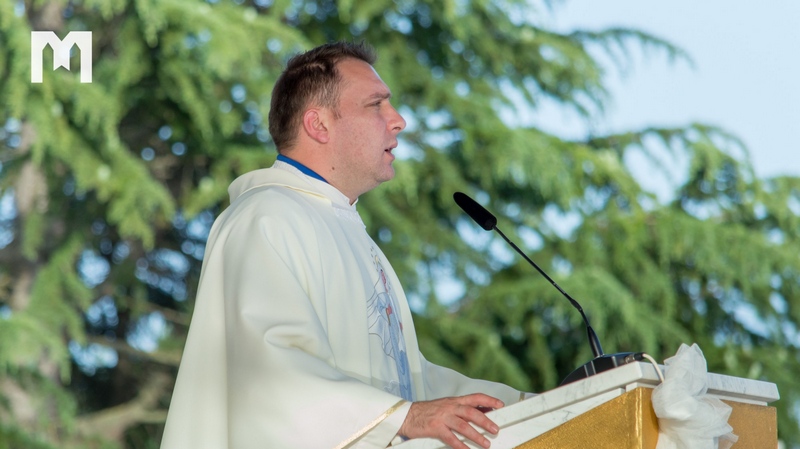
What is the difference between self-esteem and pride? Fra Stipan Klarić answered a question sent to **Radio Mir Medjugorje’s ‘Ask a Priest’ programme**. He is a priest of the Herzegovinian Franciscan Province, guardian of the Monastery of St Jerome in Slano, and chaplain of the St Blaise Police Chaplaincy within the Dubrovnik-Neretva Police Administration. In his response, he distinguished valuing oneself from self-exaltation, through which a person wants to be greater than others.
Self-esteem: awareness of one’s worth and abilities
Fra Stipan describes self-esteem as a fundamental attitude a person has towards themselves and a prerequisite for a good quality of life and mental health. He explains that it expresses our overall evaluation of ourselves and influences which events we consider worthwhile, what we undertake and which goals we strive to achieve. In his words, it helps us orient ourselves towards positive experiences and avoid negative ones.
“Self-esteem is defined as a positive or negative attitude towards oneself,” he said, explaining that it is a subjective assessment that may or may not accord with objective criteria. He distinguishes two parts within this assessment: a sense of self-worth and self-confidence. Citing the Andrija Štampar Teaching Institute of Public Health, he noted that a sense of self-worth entails the conviction that we have the right to be happy and deserve achievement, success, friendship and fulfilment.
Self-confidence, he continued, is the belief that we are capable of thinking, learning, making decisions, and overcoming challenges and change. He counts self-assessment among the most important assessments we make in life: how we value our own abilities and worth also affects our behaviour when we face life’s challenges. That is why, in his explanation, self-esteem is inseparable from everyday decisions and the way we approach difficulties.
He stressed that we are not the only ones who influence this assessment. Self-esteem is also shaped by the reactions of those around us and the messages we receive from other people. Acceptance and praise can strengthen it, while frequent criticism—especially disapproval and belittling—contributes to its weakening. Alongside the personal evaluation of oneself, Fra Stipan therefore highlights the importance of the relationships we live in and the ways in which others show us acceptance or devalue us.
He linked high levels of self-esteem and self-confidence with physical and mental health, greater resilience to stress, and a willingness to help others and care for their well-being. In his explanation, awareness of one’s own worth also helps in conflicts: we find it easier to accept criticism, do not blame others when things go wrong, and can ask for forgiveness when we make a mistake. He also connected this with a person’s autonomy and independence.
On the other hand, he said, people with low self-esteem may think of themselves as incapable, unintelligent or unattractive, or judge themselves predominantly negatively. Developing self-esteem and self-confidence should therefore, Fra Stipan says, be an integral part of upbringing, personal growth and maturation. It is not something that can be accomplished once and for all, but a development that accompanies a person’s maturation.
Pride is not self-respect, but self-exaltation
Addressing the other part of the question, Fra Stipan describes pride as self-exaltation, recognisable in arrogance and vanity. He mentioned that the ancient Greeks called it “excessive brilliance” and connected it with a series of sinful failings through which Jesus explains that evil comes from the human heart. “A proud person is someone who does not respect himself, but considers himself much greater than he is,” he said.
He also sees a difference in how one relates to others. In his words, the proud person’s aim is not simply to be recognised or praised, but to be greater than others. They want only their own merits to be seen, acknowledged and exaggerated, while they despise others, considering them subordinate and less worthy. He thus described self-esteem as valuing oneself, and pride as overestimating oneself while devaluing others at the same time.
He linked the sin of pride with the failing of vanity, but stressed that pride can leave far greater devastation. “If vanity is a sickness of a person’s ego, it is only a minor sickness compared with the devastation that pride can leave within a person.” He recalled the ancient monks who recognised an order in the sequence of evils, beginning with gluttony and extending to sins they described as the most horrific. In that sequence, he noted, they called pride the great queen of sins.
Fra Stipan finds a deeper picture of pride in the account of the first parents’ sin in the Book of Genesis. He interprets their desire in the Garden of Eden to be like God, if not greater, as the sin of pride. Then, citing spiritual writers, he emphasised that pride destroys human relationships and poisons the sense of brotherhood that should unite people. In his account, he therefore also connects its consequences with damage to communion.
Humility as openness to God’s grace
“Salvation is connected with humility, and humility is the true remedy for all pride,” Fra Stipan said. He pointed to Mary’s canticle, the **Magnificat**, in which Mary sings of God, who by his power scatters the proud in the thoughts of their hearts. In this context, he stressed that trying to take something from God, as the proud hope to do, is futile, because ultimately God wants to give us everything.
He also referred to the Letter of James, and its message that God opposes the proud but gives grace to the humble. Speaking about the community to which the apostle addresses his letter, he connected its internal conflicts with pride. He expressed the conclusion of his response in these words: “Humility is open to God’s grace, while pride is absolutely closed to God’s grace.” Finally, he specifically emphasised that **self-confidence and pride should not be confused**.
The full response by Fra Stipan Klarić is available in the audio recording accompanying the original article by Radio Mir Medjugorje. The programme ‘Ask a Priest’, in which priests who collaborate with the radio station answer listeners’ questions, airs on Mondays at 8:20, with a repeat the same day at 8 p.m.