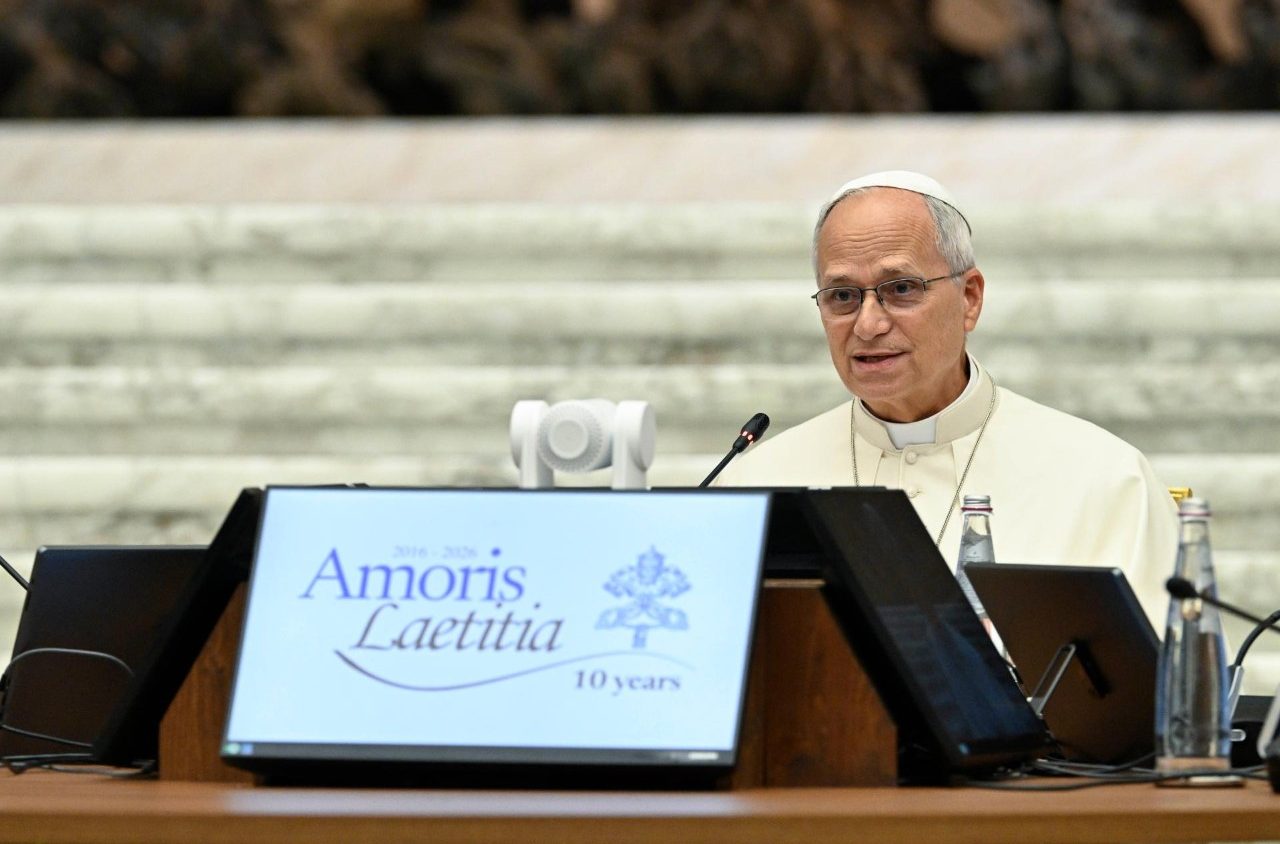
Pope Leo XIV called on the Church to renew its commitment to accompanying families through the challenges and vulnerabilities they face today. In his opening address on 7 October 2026 at the Vatican meeting “Ten Years of *Amoris laetitia*: Proclaiming the Gospel with Families Today,” he said the time had come to share experiences gathered since the publication of Pope Francis’s apostolic exhortation on love in the family, Vatican News reports.
“I hope that, through the many testimonies you bring from your Churches and from different cultural settings, we will gradually be able to shape a shared account of these ten years, marked by joy and hope, which may help us face honestly the challenges and difficulties that remain,” the Pope said. He encouraged participants to bring the experiences of their communities into a shared reflection on accompanying families.
Leo XIV convened the meeting of the heads of the Eastern Churches and the presidents of bishops’ conferences on 19 March 2026, on the occasion of the tenth anniversary of the exhortation *Amoris laetitia*. It is being held from 7 to 14 October in the Paul VI Hall, with married couples and various experts also taking part. The programme follows a synodal format: alongside plenary sessions, it includes testimonies, meditations, presentations, conversations, group work and prayer. The work will conclude with a Mass presided over by the Pope, and a summary report on the meeting’s outcomes is also planned.
The family as a starting point for the great questions of our time
Leo XIV situated pastoral care for marriage and the family within the path the Church and his predecessors have continued since the Second Vatican Council. He recalled that the Council Fathers included “the dignity of marriage and the family” in the Pastoral Constitution *Gaudium et spes* on the Church in the modern world. In doing so, he said, they recognised that family life offers a privileged point of entry to the great cultural, economic, social and political questions of our time, including the commitment to peace among peoples.
The interdependence of these questions is even more evident today, the Pope said. The family continues to play a key role in an approach that links the local and the global, guided by the pursuit of universal fraternity in Christ. That is precisely why those gathered for the meeting have an important responsibility, Leo XIV stressed. In his historical overview, he also mentioned the post-synodal apostolic exhortation *Familiaris consortio* by Saint John Paul II, highlighting the particular responsibility this half-century journey of the Church brings to pastors.
On this path, *Amoris laetitia*, the fruit of two synods on the family held in 2014 and 2015, marked an important stage, the Pope said. He called for an exchange of stories, fruits and questions from the past decade. He reflected on experiences of conversion, unexpected fruits and relationships, as well as the difficulties the Church had encountered in walking alongside families. Under the guidance of the Holy Spirit, he said, careful consideration of these experiences can help discern what Christ has been teaching his Church and where his Spirit is leading it today.
Families take part in the mission of the Church
The Pope also recalled his message of 19 March, in which he convened the meeting. In it, he stressed that there are places and circumstances where the Church can become “the salt of the earth” only through the lay faithful, and especially through families. The exhortation *Amoris laetitia*, he emphasised, calls for taking seriously the vocation and responsibility of families themselves in carrying out the Church’s mission.
Leo XIV explained that this participation takes place in ordinary daily life: through love and fidelity, care and forgiveness, raising children and seeking to pass on the faith. It includes attentiveness to the elderly and vulnerable, as well as many forms of service to one’s own communities and society. In all these ways, the Pope said, families bear witness to the Gospel and contribute to the life and mission of the Church.
Addressing those gathered as pastors, the Pope described their responsibility as proclaiming the beauty of God’s plan for marriage and the family, and his call to love and tenderness. This, he stressed, means accompanying people through life, but also listening to them. The wisdom of the People of God reaches pastors through the faith they share, he said, and sheds light on family life, including situations marked by hardship, loneliness and apparent failure. “We certainly have much to learn from families,” he said.
Questions to face with courage
Leo XIV then turned to questions that, he said, deserve to be faced courageously. Among them, he singled out the growing gap between the ways sexuality and intimacy are lived and the Christian understanding of marriage. Young people, he said, still long for love, fidelity and belonging, but many find it difficult to understand how such a vision of love can be realised in their own lives. They also find it hard to believe that a lifelong commitment is a condition for attaining what they long for.
The Pope also drew attention to the concrete circumstances that affect people’s decisions and expectations: “Economic insecurity, migration, violence, loneliness and other forms of emotional vulnerability also influence the choices people make and the possibilities they can imagine for their future.” In this way, he directed the bishops’ attention to the conditions in which people reflect on love, marriage and their future path.
The Pope posed a series of questions to participants about the meaning of these changes and how the Church responds to them: “What are people really seeking amid these cultural changes? What do their joys and hopes, their griefs and anxieties reveal to us?” He then invited them to examine where their pastoral language and practice succeed in opening a way forward, and where they fail to reach people’s hearts or support their efforts to do good.
Leo XIV also asked what the Church is being taught by the lived experience of families that it has not yet fully learned. “What can we offer in terms of formation for a healthy and holy family life? What can we learn from parents who seek to accompany their children and young people in such circumstances?” he asked. He offered these questions to participants as a means of supporting further discussion and reflection.
Closeness when life does not meet our hopes
Leo XIV devoted particular attention to vulnerability, which, he noted, can profoundly shape how people see themselves, their future and their relationship with God and the Church. “The experience of vulnerability raises the question of whether we are able to remain close to one another when life no longer matches what we had hoped for, and whether we can recognise the work of grace even in situations marked by limitations, wounds and apparent failures,” the Pope said.
Families can teach everyone in this regard, he stressed, because vulnerability is part of the shared human condition and therefore of the life of the Church. We need grace, forgiveness and new beginnings in order to do God’s will, Leo XIV said. He described fidelity as a grace to be received and as a path that is gradually renewed, often through trial.
This reflection also led the Pope to ask: “What kind of Church, then, do people encounter precisely when they are most vulnerable?” He asked whether communities help them discover that they still have a place, a responsibility and gifts to offer. He went on to ask whether the truth the Church proclaims can be encountered through the patience, closeness and mercy of its pastoral presence, and how to proclaim to these people the fullness of the Gospel’s teaching on the family.
Listening to one another and to the Holy Spirit
The Pope urged participants to give these questions their full weight and allow the Holy Spirit to speak to them even through situations that challenge them. The goal, he said, is to discern how Christ’s saving grace can reach families today: in their weakness and resilience, in their hopes and disappointments, in their longing for communion and in their search for meaning.
“Our task is not only to interpret the reality of families, but to allow them to question us and prompt our pastoral responsibility,” Leo XIV said, linking this attitude to renewed ways of proclaiming the Gospel. He called for sharing what had brought joy to local Churches, what had tested them and the questions that had become clearer through experience. The diversity of the circumstances from which participants come can, he stressed, become a gift for the discernment of the whole Church. He also asked that discretion and confidentiality be maintained during the meeting.
Listening to one another, allowing what is heard to resonate within the participants, and paying attention to the promptings of the Holy Spirit can awaken the pastoral creativity needed to address new questions, the Pope said. He asked the Lord to help gather the fruits that *Amoris laetitia* has borne in local Churches, so that they may nourish the whole Church. Such a journey, he said, can help identify new paths and involve all the baptised more deeply in the synodal journey of the Church.
He concluded his address with this prayerful hope: “May the Lord grant us the freedom to listen to one another, the wisdom to recognise his work among his people, and the courage to follow where he leads us, so that the Gospel may become ever more fully good news for families throughout the world each day.”